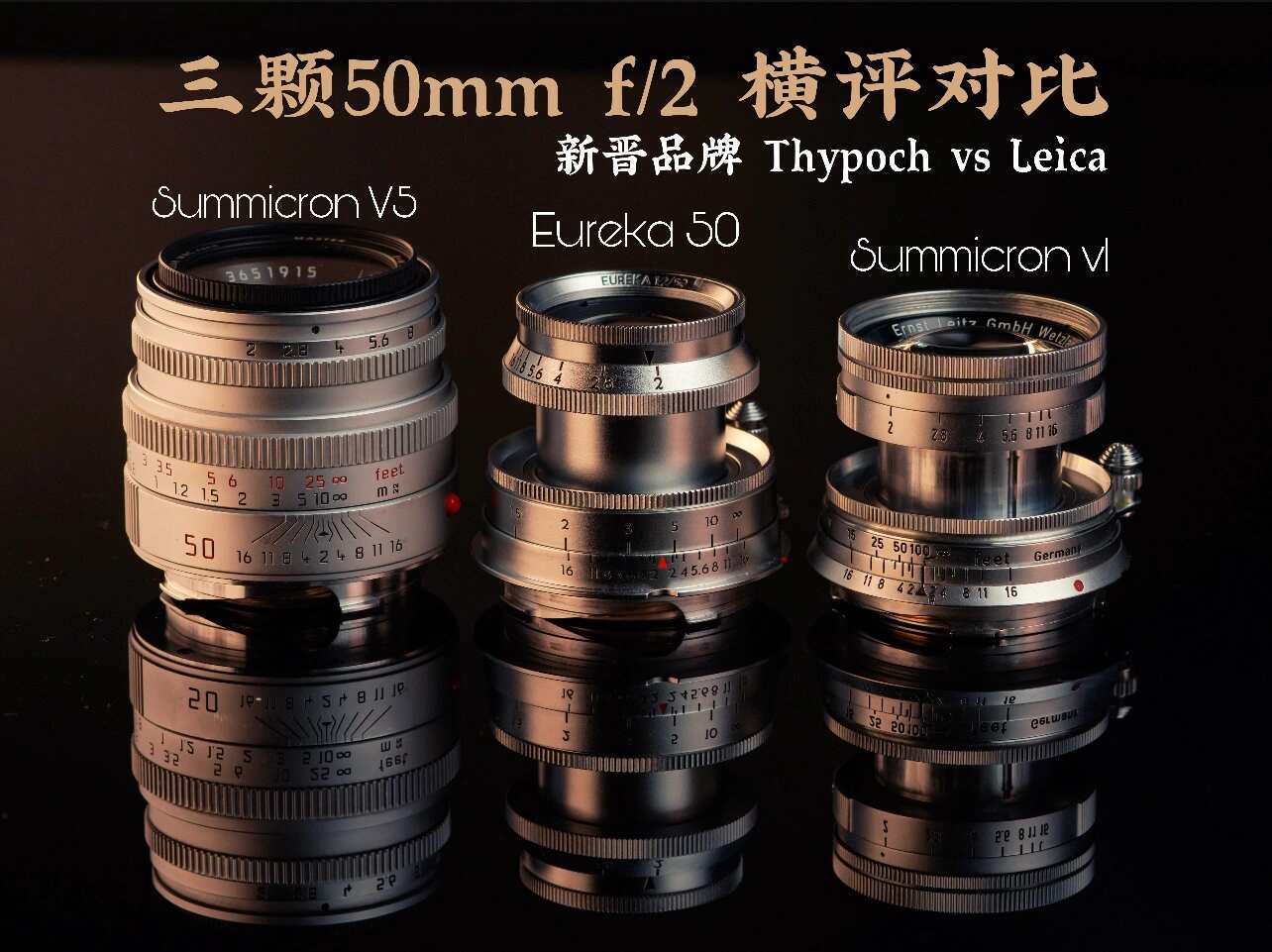
Last time I teased a comparison between the Eureka 50 and the Summicron v1, but I felt that wasn't quite enough — so this time I decided to also bring in the current-production Summicron v5, a lens that's been in continuous production for over 30 years and remains in the lineup to this day, along with the Mandler-designed optics behind it. The Summicron v4 and v5, released in 1979, share the same optical design and deliver extremely high sharpness wide open — arguably the final peak of the 50mm double-Gauss design. So how does a 1940s v1, an '80s v5, and the recently released Eureka 50 actually compare in real-world shooting?
Camera used: Leica M10-R (40MP)
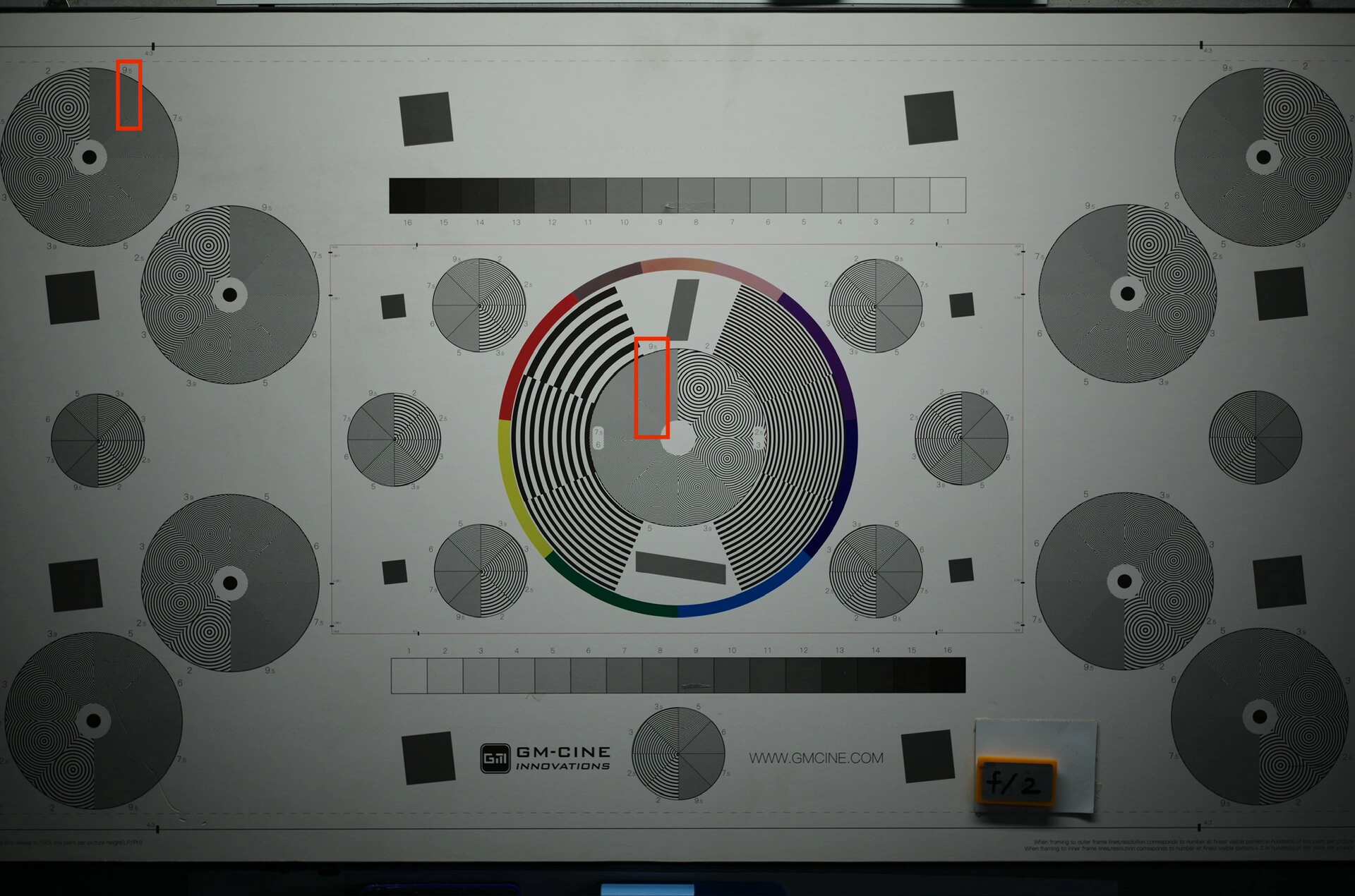
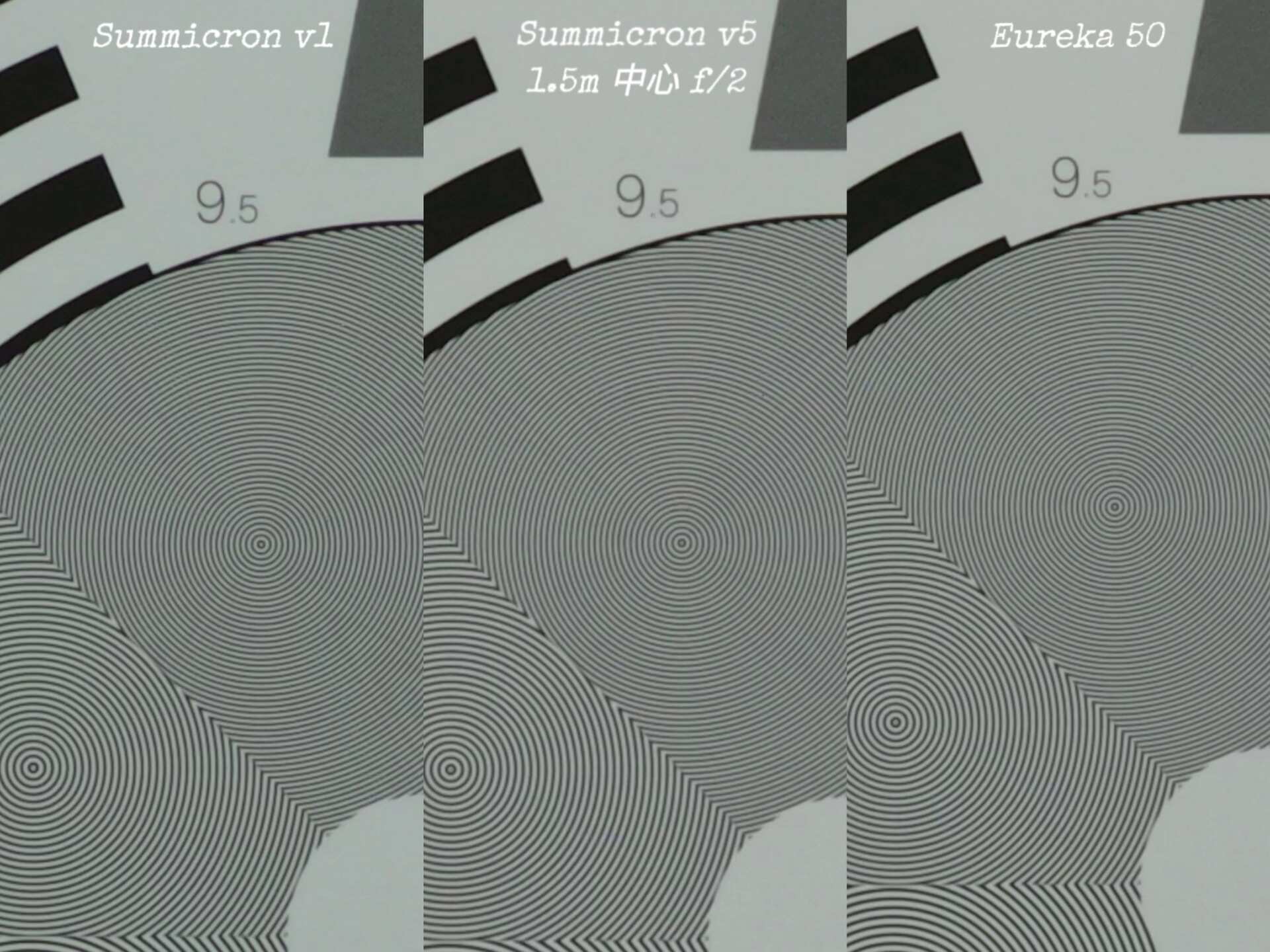
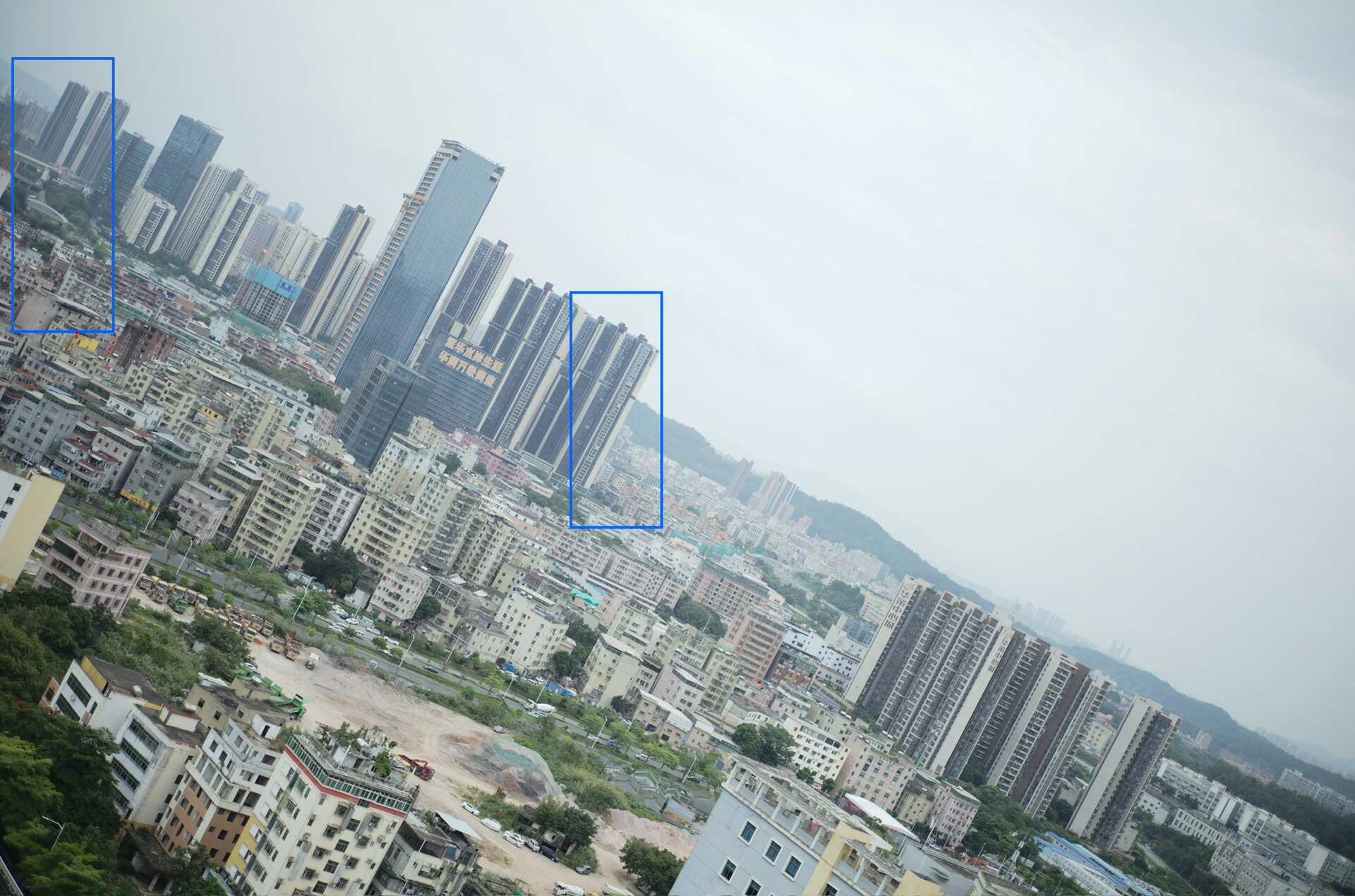
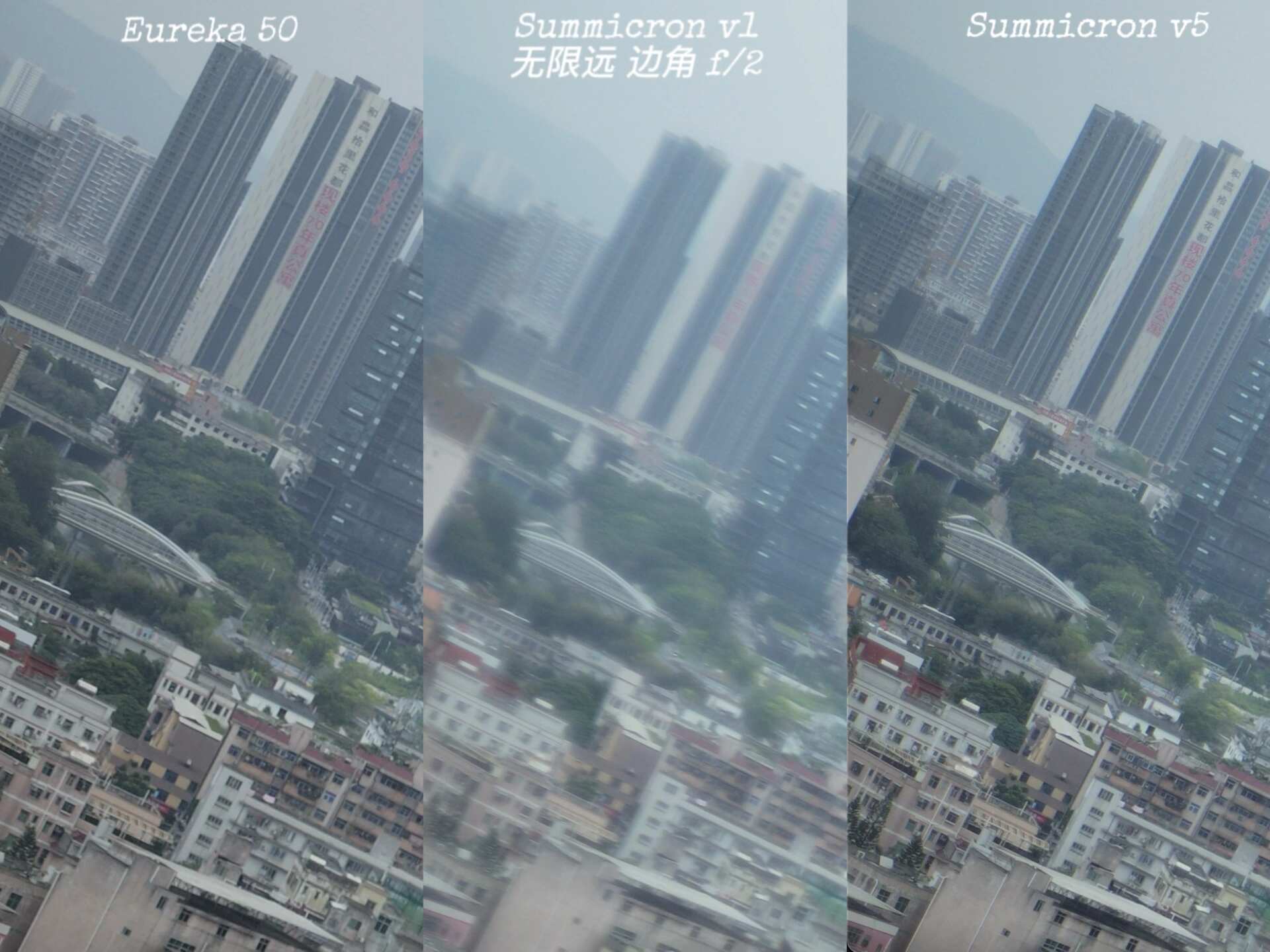
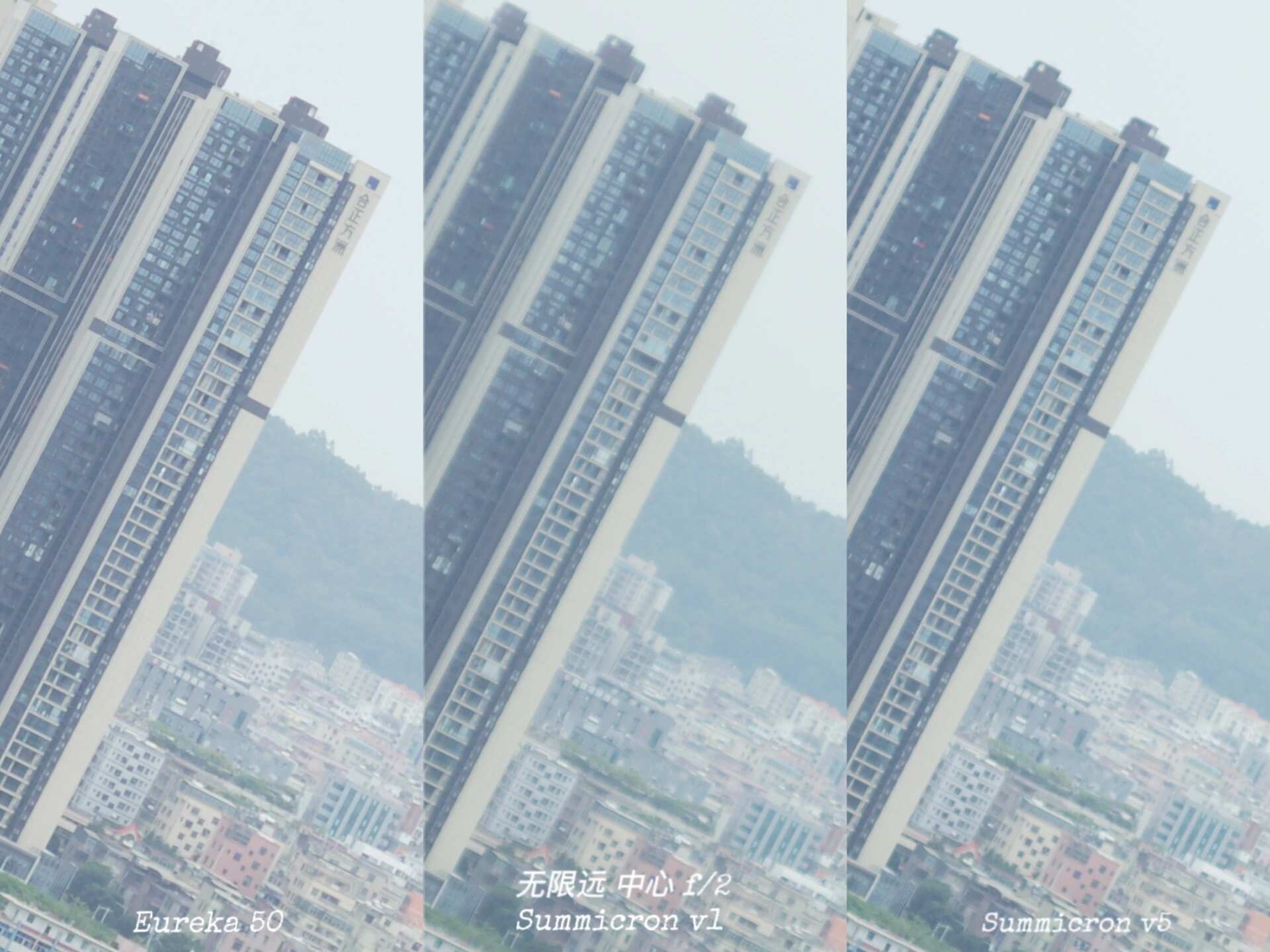
Summary: Because of image compression on Xiaohongshu (RedNote), it's admittedly hard to fully judge center sharpness, but after repeated close observation, the differences between the three lenses in this regard turned out to be fairly small. Even though the Cron v1 is a 1940s lens, its center sharpness at 1.5m is surprisingly high — though it does fall off a bit more at infinity.
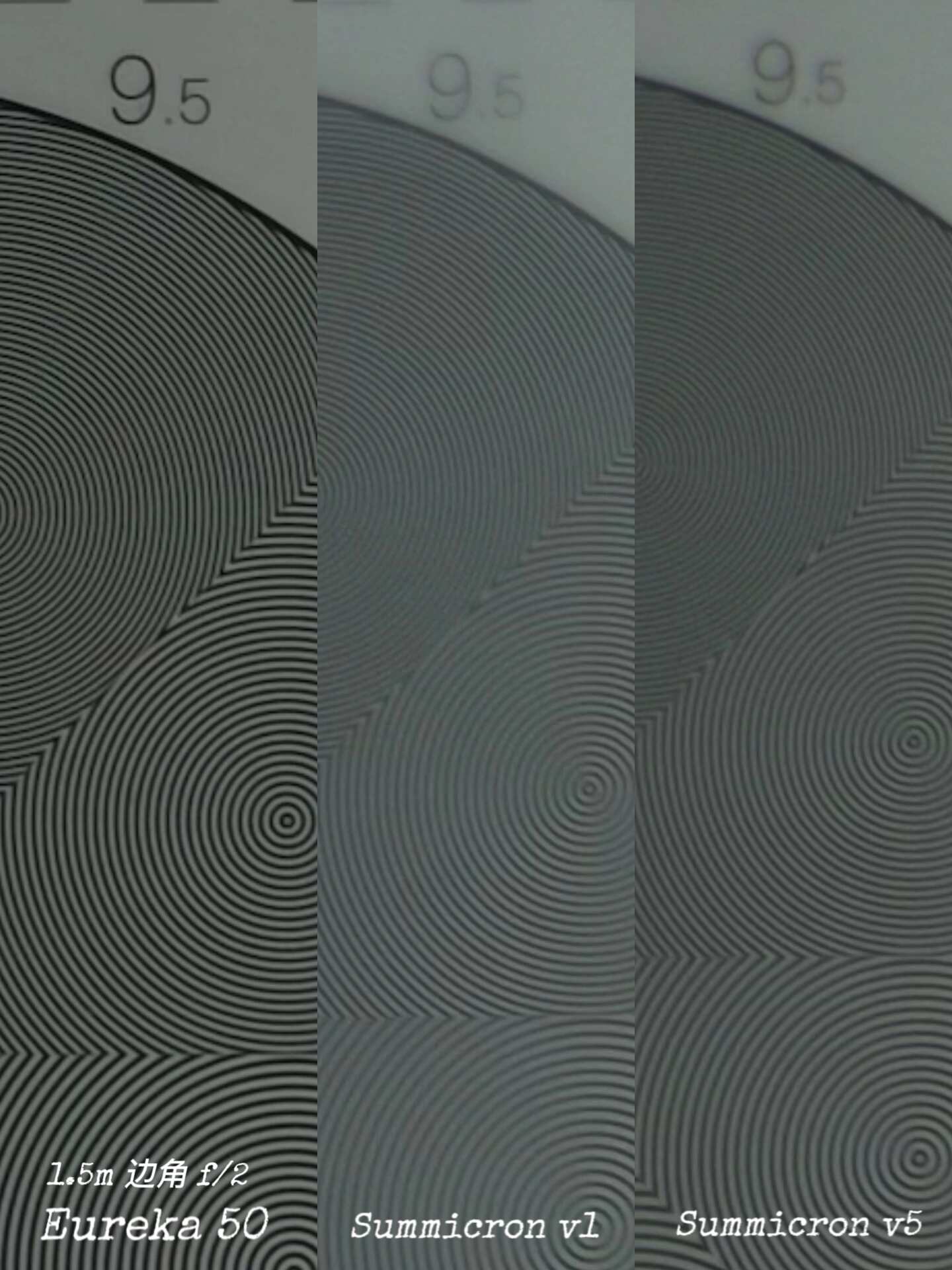
Corner sharpness, however, varies significantly among the three. The ranking is Eureka > Cron V5 > Cron V1. The Eureka holds up remarkably well from corner to center at both 1.5m portrait distance and infinity — the two stay very close to each other. The Summicron v5 has long been famous for its excellent wide-open performance, but even this legendary lens looks a bit outmatched next to the Eureka when both are shot at f/2.
Surprisingly (see images 7 and 8), the Eureka doesn't suffer the corner degradation that many M-mount lenses experience on sensors with thicker OLPF glass, like the Sony A7R IV. Its corner performance on Sony sensors is nearly identical to its performance on Leica M sensors.
 7
 8
Like the Cron v1, the Eureka also has a swirly bokeh character, but without the v1's hard-edged bokeh outlines — meaning its double-line bokeh (nisen boke) tendency is noticeably milder. The Cron v1's out-of-focus rendering leans more classic in feel, which has its own charm too.
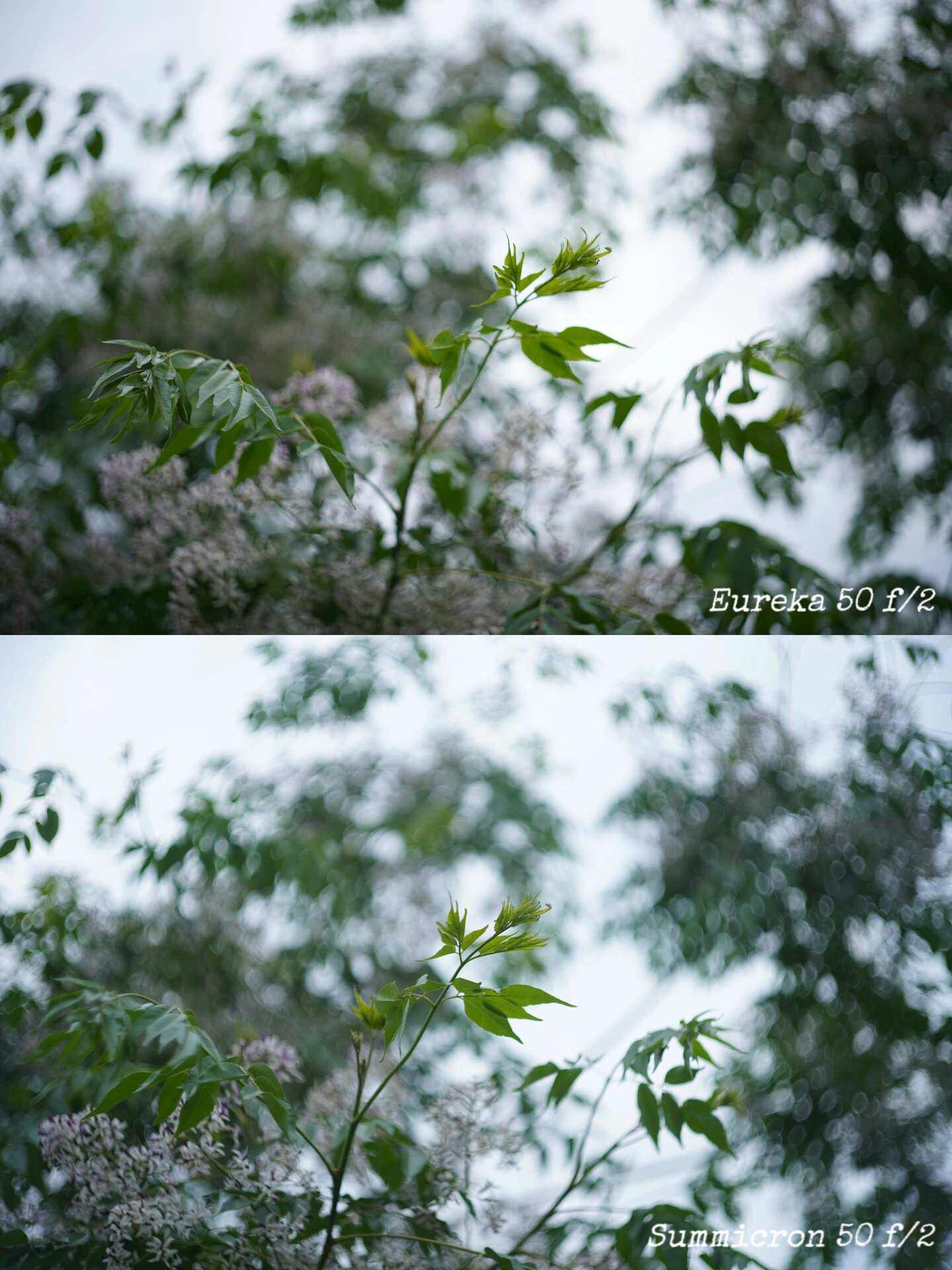
In image 10, the v1 skews slightly cooler in color temperature, while the Eureka leans a bit warmer.
 10
In image 11, as expected, the v1 shows more highlight halation and a vintage-style flare character. The Eureka also shows some halation, but to a milder degree — this one really comes down to personal taste.
 11
In image 12, repeated comparison revealed that the v1 has noticeably more barrel distortion.
 12
In image 13, compared to the Eureka, the v1 shows more longitudinal chromatic aberration — the kind that's harder to eliminate, showing up as green and purple fringing around out-of-focus highlights.
 13
This test took a lot of effort — if you made it this far, drop a like! Next time I'll try to do an even more thorough comparison across more apertures — I'm also curious how they perform at f/4 and f/5.6.